Dating advice
Realistic AI Photos: What Looks Real, What Apps Allow
Realistic AI photos are images that pass as ordinary camera photos and also look like the real person as they are today; most AI pictures manage the first and fail the second. On dating apps only the second kind is acceptable, because Match Group says your photos must honestly represent who you are and verification checks a live selfie against your profile.
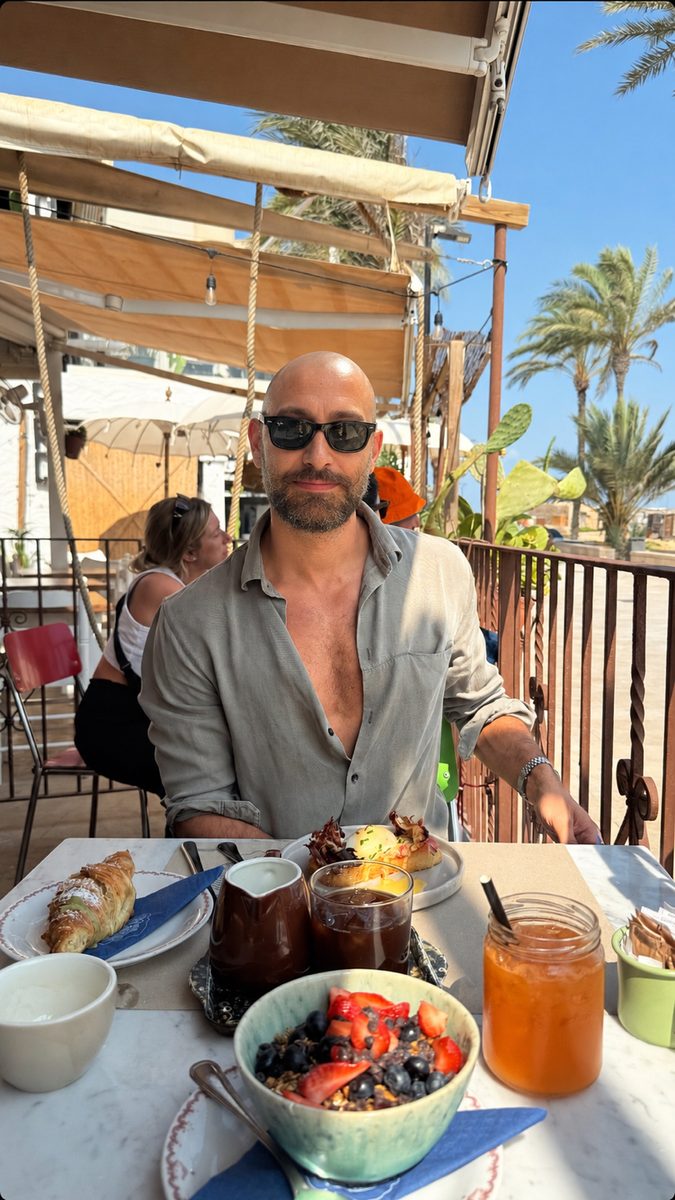
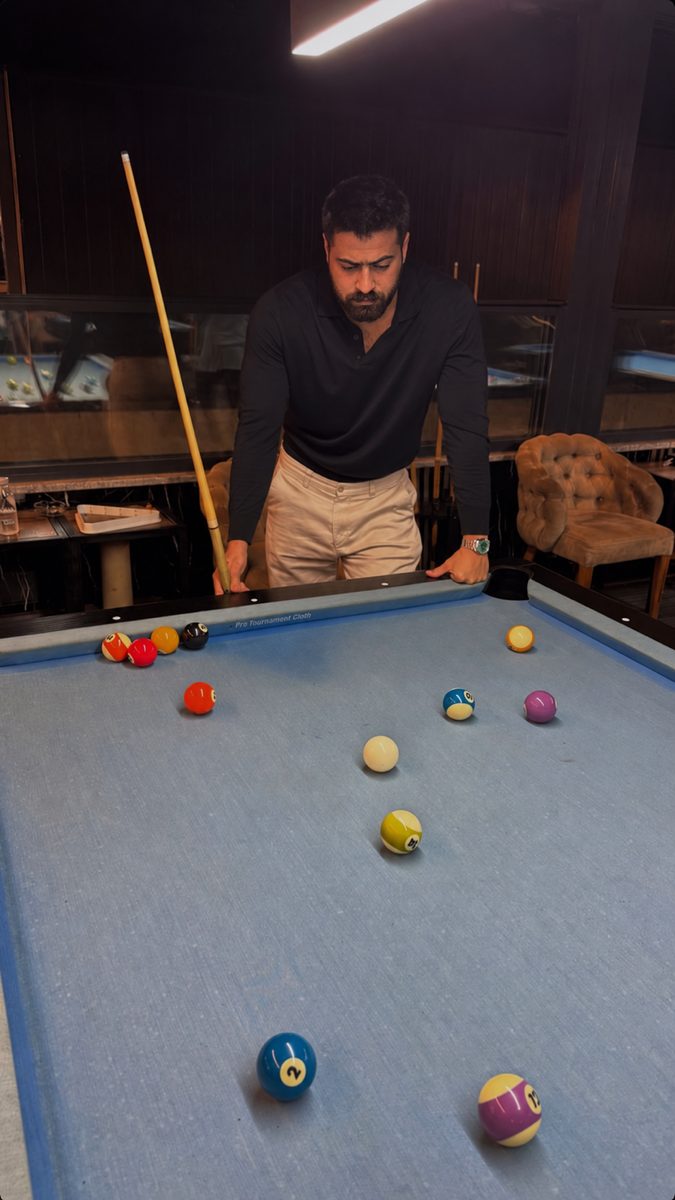
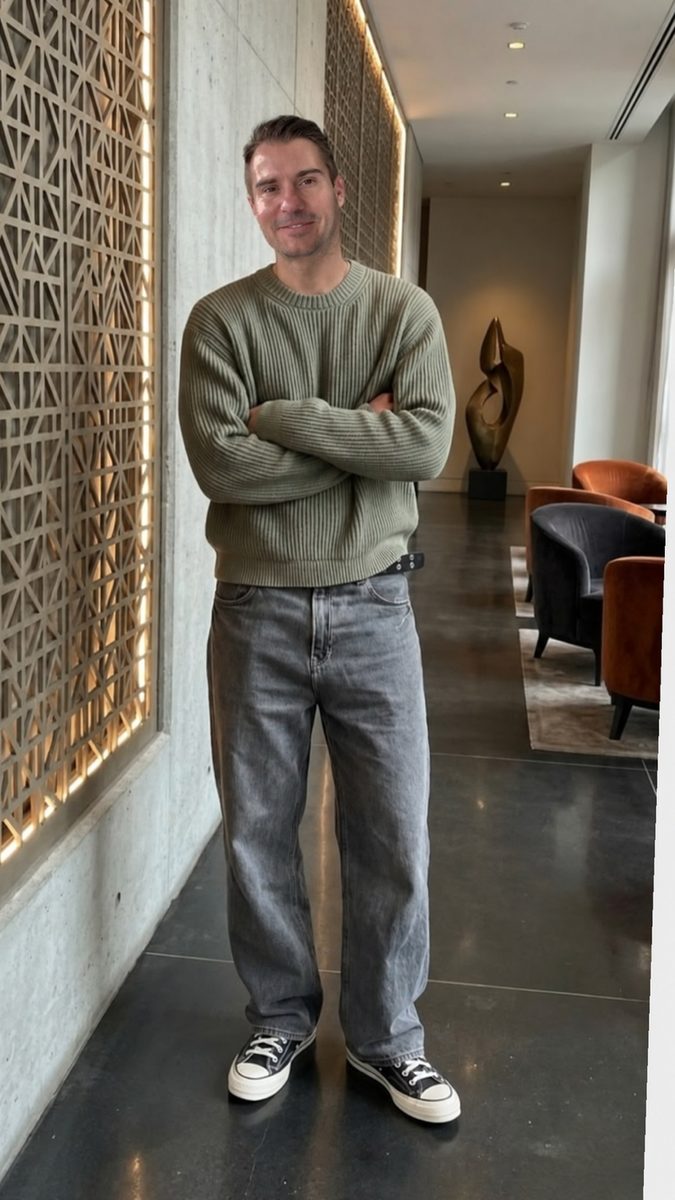
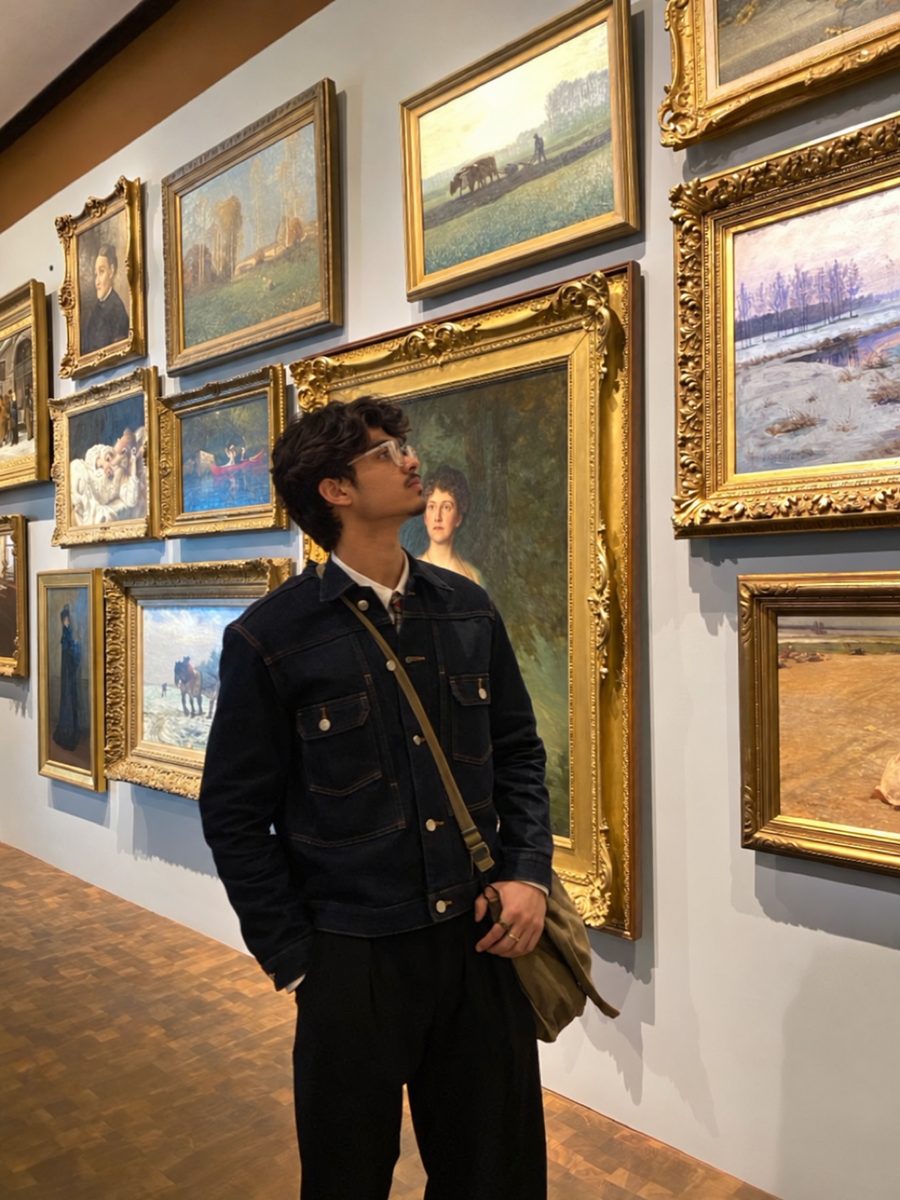
 Made with DatingProfile
What are realistic AI photos? They're AI-generated images that pass as ordinary camera photos. For a photo of a real person, "realistic" has a second meaning that matters more: the person in the picture has to look like the real person does today. Most AI pictures get the first part right and the second part wrong, and on dating apps only the second part counts.
This page explains the difference, what makes realistic AI photos look real or fake, what Tinder, Hinge, Bumble and LinkedIn allow, and how to judge a set before you use it.
Two kinds of realistic: realism and likeness
When people search for the most realistic AI picture, they usually mean one of two things:
| Realism | Likeness | |
|---|---|---|
| The question | Could this be a real photo? | Is this really you, today? |
| Where it matters | Art, ads, stock images | Dating, LinkedIn, anything people meet you from |
| How it fails | Plastic skin, warped hands, studio light | A different jaw, younger face, slimmer build, new hairline |
| Who notices | Anyone who zooms in | Your date, the moment you meet |
A general image model can make a perfectly realistic stranger. That stranger is useless on a dating profile. A personal photo tool has the harder job: keeping your exact face, age and build while changing only the setting, clothes and light. If you want the technical checklist of skin, light and camera tells, our guide to AI photos that look real goes through each one.
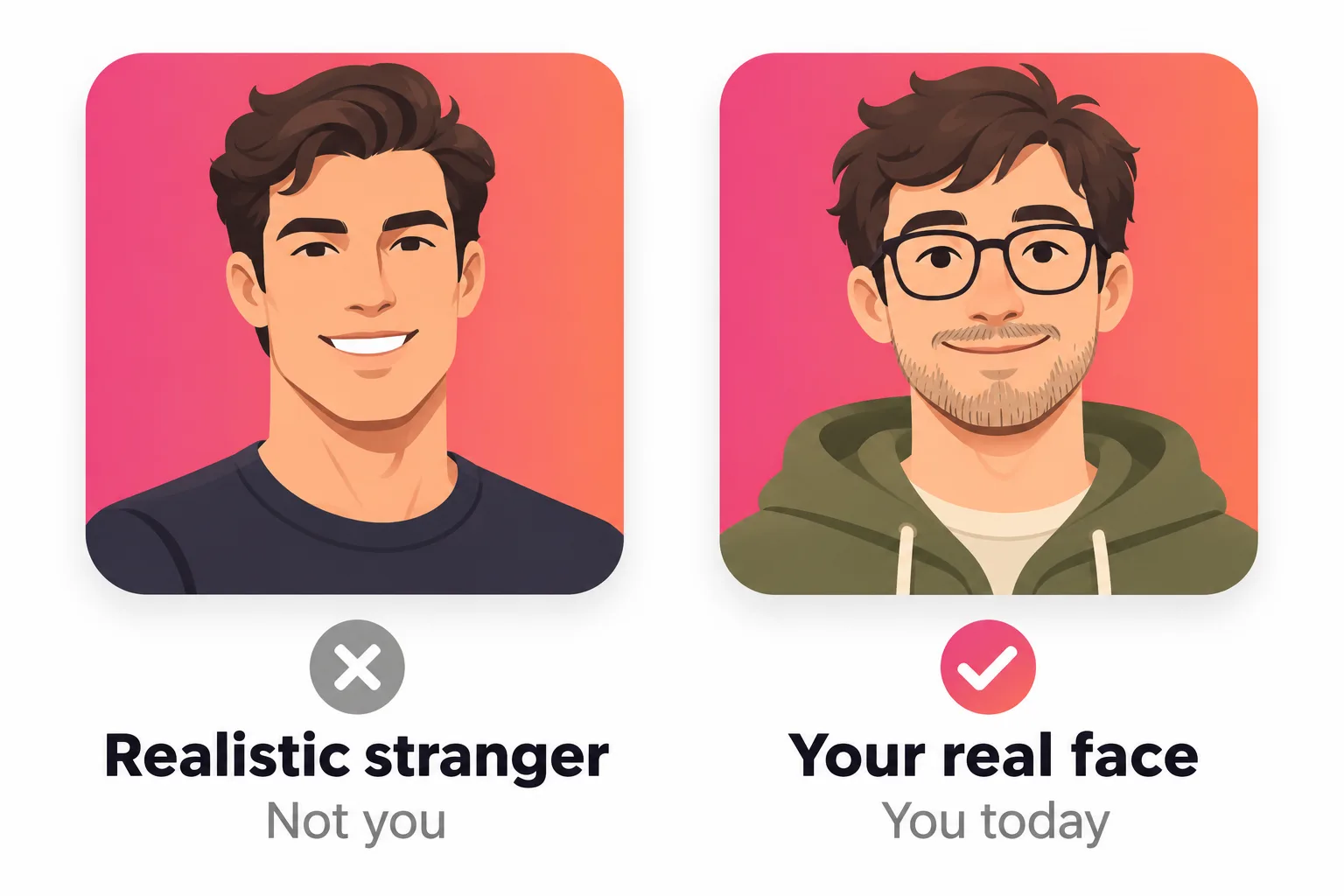
What makes realistic AI photos look real
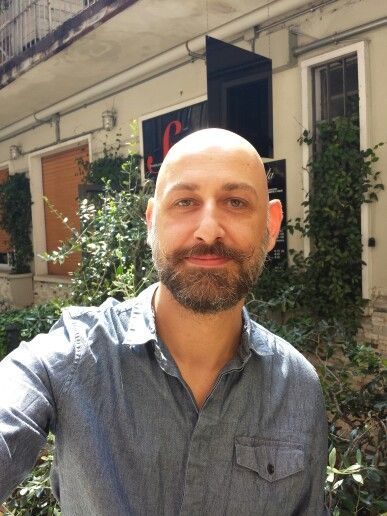
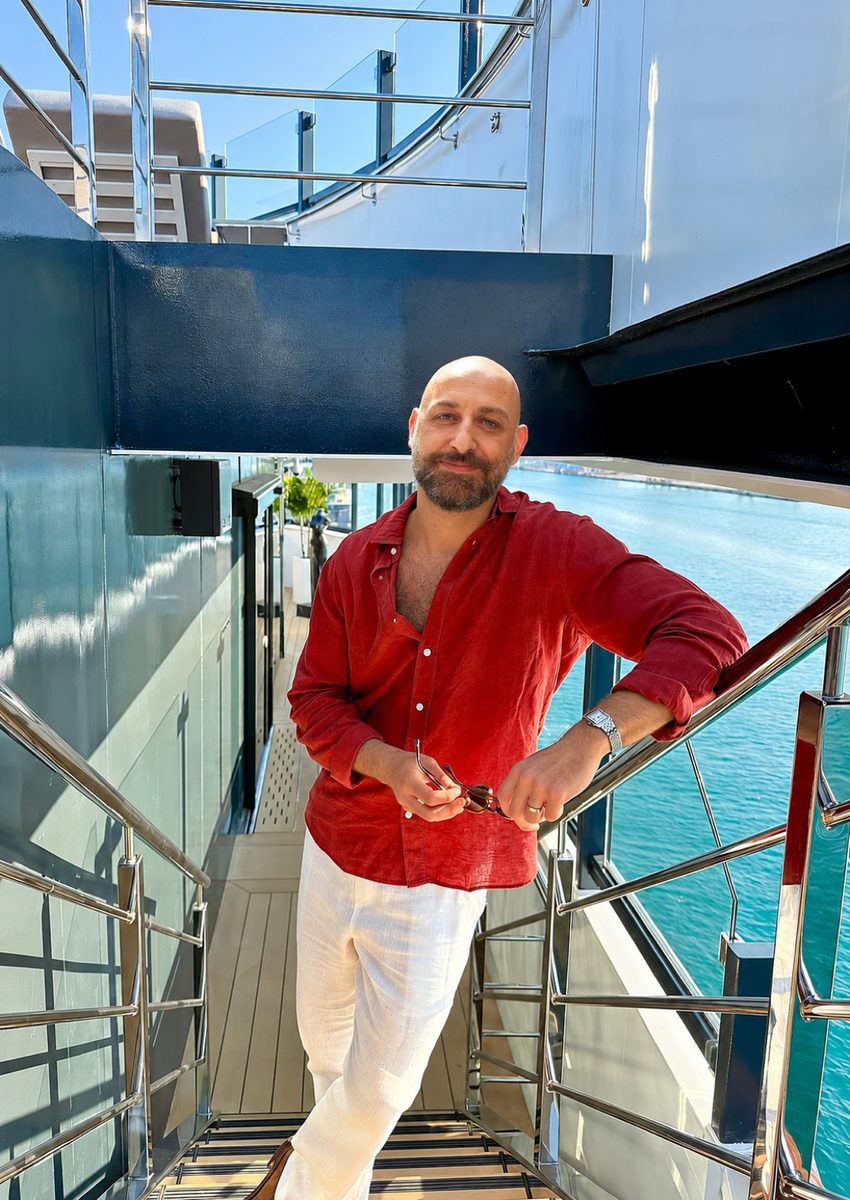
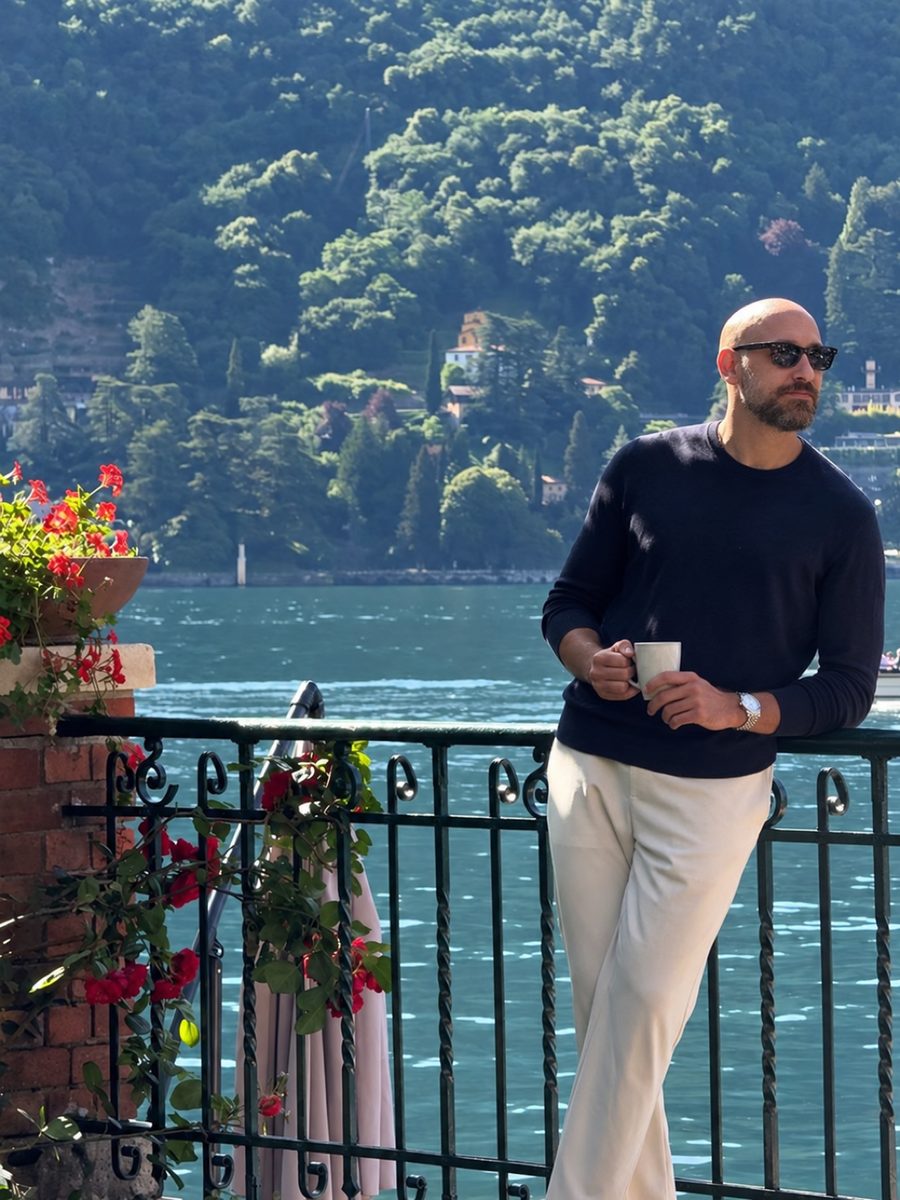
A realistic AI photo holds up on two levels: at a glance on a phone, and zoomed in.
At a glance:
- Everyday framing. Slightly wide phone-camera angles, a little background clutter, a cropped elbow. Perfect magazine composition looks wrong next to real photos.
- Light that belongs to the place. Sun on a terrace, warm bulbs in a bar, flat gray light in winter. The face is lit by the same light as everything around it.
- An ordinary moment. Eating breakfast, lining up a pool shot, looking at a painting. The photos above work because the scenes are things people actually do.
Zoomed in:
- Skin with texture, including pores, small marks and some shine.
- Hands, ears and teeth that look anatomically normal.
- Clean details: glasses arms that reach the ears, jewelry that doesn't melt into skin, text that reads as text or blurs naturally.
Why most AI photos still look fake
The usual reason isn't a technical limit. It's that many tools are tuned to make people attractive rather than accurate. The tells follow from that:
- Airbrushed skin and teeth that form one white strip
- Studio lighting on the face while the background says sunset
- The same expression in every shot, often a closed-mouth half smile
- A face that drifts from photo to photo, so you look like a slightly different person in each
- Implausible lives: private jets, yachts, red carpets, six countries in one profile
The last one is easy to miss. A photo can be technically flawless and still read as fake because it doesn't fit the rest of the profile, or because the person on the date has never been on a boat.
Realistic AI photos and dating app rules
The apps don't ask whether a photo was made by a camera or a computer. They ask whether it honestly shows you. As of November 2026:
- Tinder and Match Group. Tinder's guidelines say "Just be you" and ask you not to pretend to be someone you're not. On its page about India's rules for synthetic media, Match Group states that your profile, photos and content "must honestly represent who you are", and that sharing synthetic images there may result in content removal, account suspension or a permanent ban. The same page says routine edits like brightness or color adjustment generally don't count.
- Hinge. Its Community Guidelines require one photo that clearly shows your face and say "misleading or outdated photos" go against its values of honesty and authenticity.
- Bumble. Since July 2024 members can report a profile under Fake profile, then "Using AI-generated photos or videos".
- LinkedIn. Its photo guidelines say your profile photo "must reflect your likeness". Stock imagery and other people's likenesses can be removed.
The practical rule across all of them: use only photos that show your real face, real age and real build, as you look now.
Photo verification is the real test
Tinder's photo verification asks for a short video selfie. Tinder checks that the video is of a live person and wasn't digitally altered, then compares your face with a clear solo face photo on your profile. One listed reason for rejection is that the person in the video didn't match the person in the profile photos, and Tinder says new photos added later are also checked and can affect your verified status.
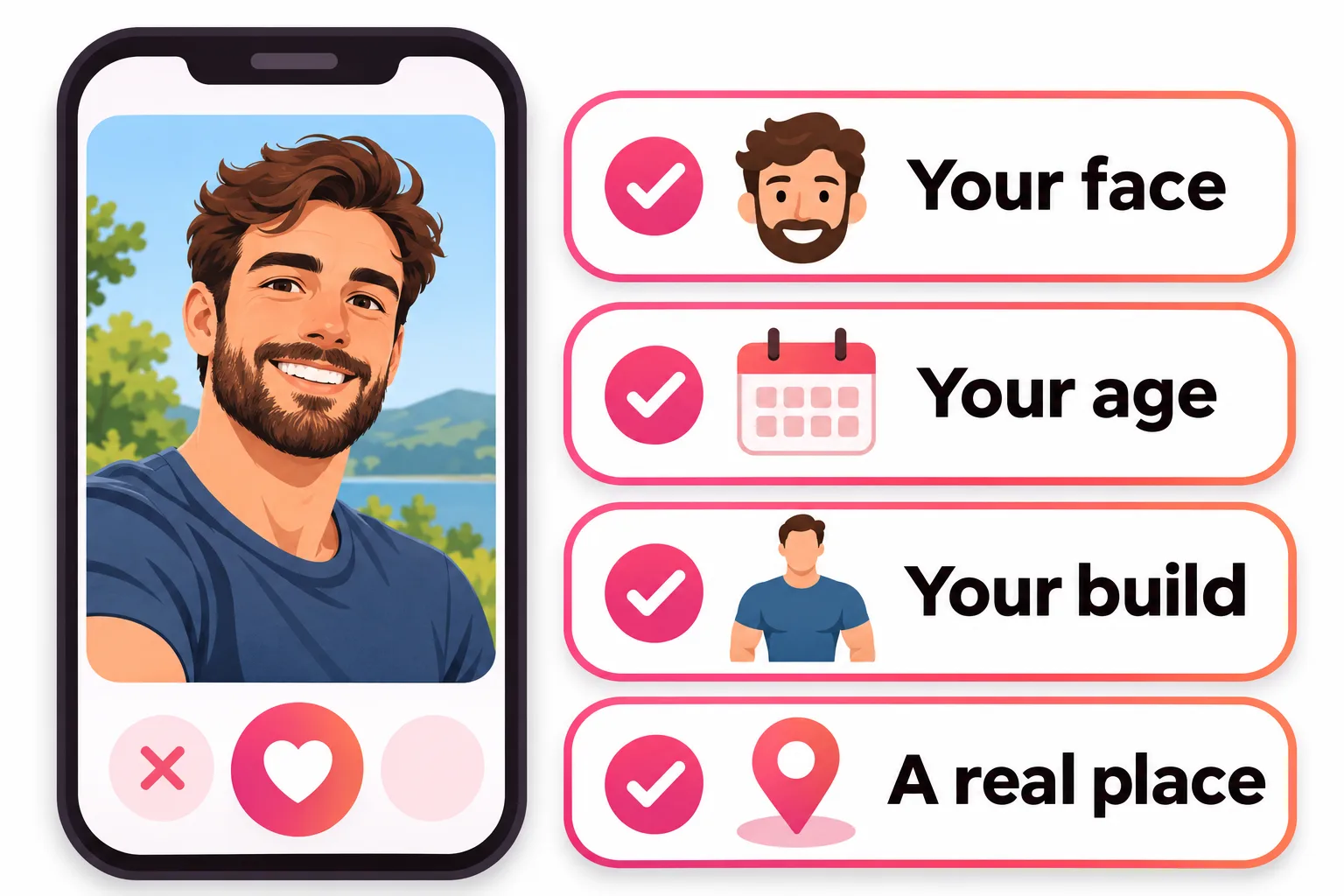
That's where an unrealistic likeness gets caught. A photo that makes you look younger, slimmer or more chiseled than your selfie camera does is exactly what this check is built to notice. Keeping one real, recent face photo in your set gives it something reliable to match.
How to judge a set of realistic AI photos
Before anything goes on a profile, run each photo through these checks:
- A friend recognizes you instantly, without being told it's you
- Your age is right. No smoothed-out lines or missing gray
- Your build is right. Same shoulders, same weight, same height cues
- Your hair and facial hair match today, not two years ago
- The scene is plausible for you: a café, a hike, a dinner, a city you've visited
- It survives a zoom on hands, ears, teeth and any text
Delete anything that fails even one. Four believable photos beat twelve with a couple of obvious fakes, because one obvious fake makes people doubt the rest. If you want a second opinion, our free AI profile picture tool and photo rater can help you compare options.
Where realistic AI photos help, and where they don't
They help most when the problem is the camera roll, not the face: no recent photos, only selfies, nobody around to take a full-body shot, or every picture taken in the same bad light. They don't fix a profile that misrepresents you, and they can't replace a real face photo for verification. For the rest of the profile, see our guides to dating profile pictures and good profile pics for guys.
Realistic AI photos of you, from one selfie
DatingProfile's HyperReal™ method is built around likeness first. You upload one selfie (up to 4 makes the likeness closer), choose everyday styles like brunch, a hobby or a full-body shot, and get 4 shots per style in about a minute. Your real face is kept; you pick only the photos that pass the checks above and look like you do now, and you follow each app's rules. It's a one-time payment: $29 for the Fix Pack (up to 30 photos) or $49 for the Pro Pack (up to 140), with a 14-day guarantee.
Pricing
Packs and prices
Two one-time packs. Pay once: no subscription, nothing to cancel. Both are covered by the refund policy.
The Fix Pack
A quick upgrade for your profile.
$29one-time
Up to 30 photos · $0.97 per photo
Choose Fix- HyperReal™ photos in any of 62 styles
- Ready in about a minute
- Works with app photo verification
- 14-day satisfaction guarantee
The Pro Pack
The sweet spot for a full glow-up.
$49one-time
Up to 140 photos · $0.35 per photo
Choose Pro- HyperReal™ photos in any of 62 styles
- Enough for about 35 styles, 4 shots each
- Lowest price per photo
- Ready in about a minute
- Works with app photo verification
- 14-day satisfaction guarantee
DatingProfile vs a dating photographer
| Factor | DatingProfile |  Photographer |
|---|---|---|
| Cost | From $29 | $300–$500 per shoot |
| Turnaround | Under a minute per photo | Days to weeks |
| Scenes & outfits | 62 styles, 4 different shots each | Whatever fits in one shoot |
| Want more? | Buy another pack anytime | Book and pay again |
| Looks like you | Yes, made from your selfies | Yes |
Privacy: Your selfies and generated photos are never used to train AI models and are never shared or sold. Only you can see them, and you can delete them from your dashboard at any time.
Frequently asked questions
What makes an AI photo look realistic?
Skin with real texture, light that matches the scene, the slightly imperfect framing of a phone camera, and details that hold up when you zoom in, such as hands, ears, teeth and text. For a photo of a real person, it also has to keep their face recognizable from shot to shot.
Are realistic AI photos allowed on Tinder and Hinge?
Neither app bans AI tools by name in its general guidelines, but both require honesty. Match Group, which owns Tinder and Hinge, says your profile and photos must honestly represent who you are, and Hinge's guidelines say misleading or outdated photos go against its values. In India, Tinder says sharing synthetic images may lead to content removal, suspension or a permanent ban.
Will a realistic AI photo pass Tinder photo verification?
Nobody can promise that. Tinder's verification compares a live video selfie with a clear solo face photo on your profile and checks the video wasn't digitally altered. Photos that drift from how you really look are likely to fail, so keep at least one real, recent face photo in your set.
Can people tell my dating photos are AI?
They can if the photos are too polished, show a life you don't live or don't match you on a date. Bumble even lets members report a profile for "Using AI-generated photos or videos". Realistic photos that show your real face, build and style in everyday places are much harder to tell apart, and they don't create a problem when you meet.
What is the most realistic AI picture generator?
There isn't one winner. General image models make convincing strangers, while personal photo tools are judged on whether the person still looks like themselves. Test any tool on your own face and reject every result a friend wouldn't recognize at a glance.
Can I use an AI photo on LinkedIn?
LinkedIn's photo guidelines say your profile photo must reflect your likeness, and they allow an illustration or artistic rendering of yourself. Stock images and other people's likenesses can be removed. A realistic photo of you, as you look now, fits those rules; a flattering stranger doesn't.
Sources
- Tinder Help Center: India's Synthetically Generated Information (SGI)
- Tinder Help Center: How Does Photo Verification Work?
- Tinder Help Center: Photo Verification
- Hinge Help Center: Community Guidelines
- Tinder Community Guidelines
- LinkedIn Help: Profile photo guidelines and conditions
- TechCrunch: Bumble users can now report profiles that use AI-generated photos (July 2024)
Better photos, more matches
Turn one selfie into dating profile pictures
Hyperrealistic photos of you for Tinder, Hinge and Bumble, about a minute per photo. From $29, one-time.
Create my photos